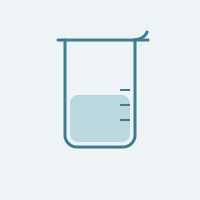
Beaker
The workhorse container. Used for stirring, mixing, heating liquids, and rough volume estimates — never for precise measurement, since the printed marks are only approximate.
- Best for
- Mixing, heating, holding reactions
- Precision
- Low (±5%)
Reference / Rev. 2026.1
A plain-language guide to the equipment you'll find in most wet labs — what each piece is actually for, how it behaves, and which manufacturers have earned their reputation. No jargon walls, no sales pitch.
The vessels that hold, mix, measure, and heat. Almost all of it is borosilicate glass — low thermal expansion, so it shrugs off temperature shocks that would crack ordinary glass.
The workhorse container. Used for stirring, mixing, heating liquids, and rough volume estimates — never for precise measurement, since the printed marks are only approximate.
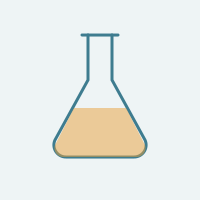
The cone shape lets you swirl contents vigorously without splashing, and the narrow neck is easy to stopper. Ideal for titrations and cultures where you mix a lot.
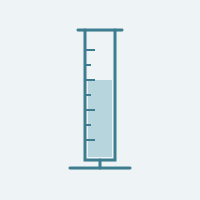
Tall and narrow for accurate volume readings — read at the bottom of the meniscus, at eye level. The go-to when a beaker isn't precise enough.
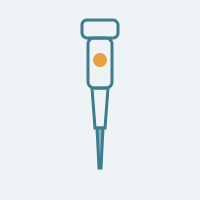
For transferring small, exact volumes of liquid. Manual glass pipettes exist, but most labs run adjustable-volume micropipettes with disposable tips for microlitre precision.
Powered equipment that measures, separates, magnifies, or heats with more control than the bench alone can offer.

Magnifies samples far beyond the eye's reach. Compound light models handle most teaching and clinical work; stereo and electron scopes cover the extremes of scale.

Spins samples at high speed so denser components sink to the bottom. Essential for separating blood, isolating cells, and clarifying suspensions.
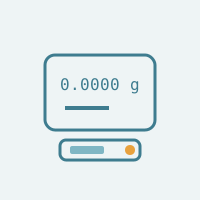
Weighs mass to four decimal places (0.0001 g). Kept behind a draft shield because a breath of air is enough to disturb the reading.
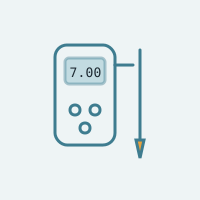
Measures acidity or alkalinity with a glass electrode — far more accurate than paper strips. Needs regular calibration with buffer solutions to stay honest.
Equipment for heating, sterilising, and working with hazardous materials without harming yourself, your samples, or the room.

A single gas flame with an adjustable air intake. The classic heat source for sterilising loops and heating glassware — the blue roaring flame is the hot one.
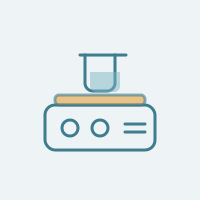
Heats and stirs at once using a spinning magnetic bar. Safer and more controllable than an open flame, and the default for most solution prep today.
A pressure cooker for the lab. Sterilises equipment and media with pressurised steam, typically 121 °C for 15+ minutes — the standard for killing all microbial life.

A ventilated enclosure that pulls toxic vapours away from you and out of the building. Any work with volatile solvents or fumes belongs here, sash lowered.
Reputations built over decades. These are the names labs reach for when reliability matters — grouped by what they're best at.